Best 11 Software Composition Analysis (SCA) Tools For Development Teams (2026)
We reviewed the leading SCA tools on how accurately they identify vulnerable open-source components, the quality of license compliance reporting, and how well they fit into developer workflows without slowing delivery.
 Written by
Joel Witts
Written by
Joel Witts
 Technical Review by
Laura Iannini
Technical Review by
Laura Iannini
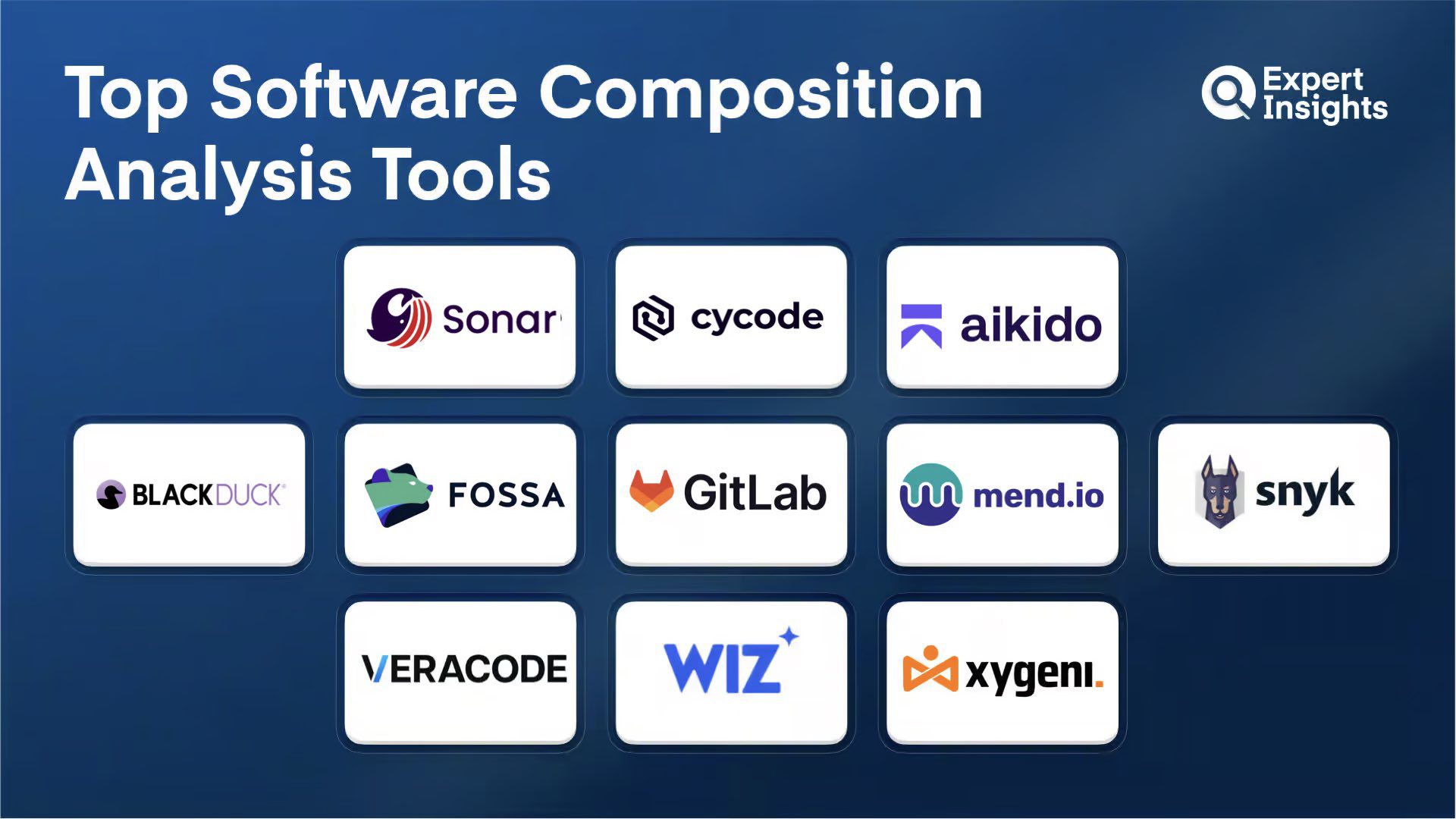
Software Composition Analysis (SCA) tools scan codebases and build manifests to identify vulnerable open-source components and license compliance issues. Open-source components introduce security and compliance obligations that organizations frequently underestimate. We reviewed the top tools and found Cycode and SonarQube to be the strongest on vulnerable component identification accuracy and developer workflow integration.
Software composition analysis (SCA) tools identify open-source vulnerabilities before they reach production. In practice, most teams get drowned in alerts about dependencies they don’t actually use, vulnerable libraries that aren’t exploitable, and findings that don’t correlate across different scanners.
Separating the ones that matter from the noise while keeping developers engaged enough to actually remediate them is what separates a good choice from a regretted one. You need detection that covers your entire language stack, prioritization that reduces false positives, and integration that fits your development workflow instead of creating extra work.
We evaluated 11 SCA platforms across cloud, self-hosted, and on-premises deployments, testing each for dependency detection accuracy, language coverage, SBOM generation, integration depth, policy enforcement automation, and how effectively teams can reduce alert fatigue without sacrificing coverage.
What is Software Composition Analysis (SCA)?
Software Composition Analysis, or SCA, is the practice of finding out exactly which open-source and third-party components your software depends on, and then checking those components for security and licensing problems. Modern applications are built largely from open-source libraries, and each one can carry known vulnerabilities or license terms that create legal obligations. An SCA tool scans your codebase and build files, builds an inventory of every component, and flags the ones with known security flaws or risky licenses, so teams can fix or replace them before the software ships.
SCA tools parse build manifests, lockfiles, and sometimes binaries to build a complete inventory of direct and transitive open-source dependencies, then match each component against vulnerability databases such as the NVD, plus proprietary feeds, and against license metadata. Findings are scored using CVSS and increasingly EPSS, and the strongest tools add reachability analysis to determine whether a vulnerable component is actually called at runtime, which filters out the unused-dependency noise that drives alert fatigue.
Beyond detection, mature SCA generates a Software Bill of Materials (SBOM) in standard formats such as SPDX and CycloneDX, enforces license and security policy automatically across the SDLC, and automates remediation through version-bump pull requests. Detection methods vary: dependency analysis covers managed package ecosystems, while binary and snippet analysis catch open-source embedded in compiled libraries or copied directly into proprietary code. The most effective deployments run in the IDE and CI/CD pipeline so findings reach developers where they work.
Application Security Solutions Compared
Here is how the top SCA tools compare on best fit and core capabilities.
| Product | Best For | Reachability Analysis | SBOM Generation | License Compliance | Self-Hosted Option |
|---|---|---|---|---|---|
|
SonarQube
|
Developer-first multi-language coverage
|
No
|
Yes
|
Yes
|
Yes
|
|
Cycode
|
Code-to-runtime visibility
|
Yes
|
Yes
|
Yes
|
No
|
|
Aikido Security
|
Low-noise scanning for lean teams
|
Yes
|
Yes
|
Yes
|
No
|
|
Black Duck Software Composition Analysis
|
Deep component detection
|
Yes
|
Yes
|
Yes
|
Yes
|
|
FOSSA
|
License compliance and governance
|
Yes
|
Yes
|
Yes
|
Yes
|
|
GitLab
|
Teams already on GitLab
|
No
|
Yes
|
Yes
|
Yes
|
|
Mend SCA
|
High-precision, low-noise SCA
|
Yes
|
Yes
|
Yes
|
Yes
|
|
Snyk Open Source
|
Developer adoption
|
Yes
|
Yes
|
Yes
|
No
|
|
Veracode SCA
|
Compliance-driven organizations
|
Yes
|
Yes
|
Yes
|
No
|
|
Wiz Code
|
Code-to-cloud context
|
Yes
|
Yes
|
Yes
|
No
|
|
Xygeni SCA
|
Supply chain risk at an accessible price
|
Yes
|
Yes
|
Yes
|
No
|
How We Tested
Expert Insights is an independent editorial team, and no vendor can pay to influence our reviews. We evaluated 11 SCA platforms, assessing dependency detection accuracy, license risk identification, and SBOM generation through hands-on testing and customer feedback. This guide was written by Joel Witts, Content Director, and technically reviewed by Laura Iannini, Cybersecurity Analyst at Expert Insights. Read our full methodology
SonarQube

Sonar
Best for Enterprises relying on open-source dependencies
SonarQube offers developer-first security for your first-party, AI-generated, and open source code, powered by advanced SAST and integrated SCA included in Advanced Security. The suite includes a complete SCA platform, which scans open-source components for vulnerabilities, license issues, and compliance risks, giving you full visibility into your software supply chain.
- Automatically detects open-source vulnerabilities and license conflicts
- Supports 35+ programming languages and frameworks
- Generates detailed SBOMs and compliance reports aligned with PCI DSS, OWASP Top 10, and STIG standards
- Provides real-time visibility into risks within developer workflows
- Maintainer insights network provides intelligence into open-source project security and patch activity
In our review, we liked that SonarQube could identify open-source vulnerabilities directly in pull requests and CI/CD workflows, and also pushes the information to the IDE, which helps you to fix faster. SonarQube is a popular solution, used by 7 million+ developers. SonarQube SCA is ideal for enterprises that rely on open-source dependencies and need to manage security, license, and compliance risks within their DevSecOps workflows. For SonarQube Cloud, a free plan is available for up to five users, with a Team plan at $32 per month. SonarQube Server Developer edition starts at $720 annually.
Strengths
Cautions
Cycode

Cycode
Best for Organizations consolidating onto a complete ASPM platform
Cycode is recognized as a Software Composition Analysis (SCA) Notable Vendor in The Software Composition Analysis Software Landscape report by Forrester. Cycode also offers a complete approach to ASPM, with proprietary code-scanning capabilities from code to cloud, including modern SCA. The ASPM platform includes the ability to connect into 100+ pre-built integrations with any third-party security tool to deliver real-time visibility into your security posture across the SDLC.
- Next-generation SCA goes beyond scanning application code to cover full pipeline composition analysis, identifying dependencies across tooling in the SDLC
- Traces the path of a vulnerability from code to production environments
- Detailed prioritization advice based on whether a vulnerability is exploitable in runtime environments
- Works alongside other scanning solutions like Snyk, Wiz, and Checkmarx to consolidate DevOps processes
- 100+ pre-built integrations for real-time visibility across the SDLC
The broader Cycode platform is a strong choice for organizations looking for complete ASPM, facilitating visibility, prioritization, correlation, deduplication, and remediation of security vulnerabilities. Cycode’s SCA goes beyond traditional scanning by covering full pipeline composition analysis and tracing vulnerabilities from code to production. Contact Cycode’s sales team for pricing details.
Strengths
Cautions
Aikido Security

Aikido Security
Best for Small to mid-sized teams consolidating security tooling
Aikido Security consolidates dependency scanning alongside CSPM, secrets detection, SAST, IaC scanning, container scanning, and runtime protection in a single platform. We think the low-noise approach to SCA findings makes this a strong fit for development teams drowning in alerts from traditional scanning tools who want unified security without the fatigue.
- False positive reduction uses deduplication, automatic triaging, and custom rules to filter out noise
- CVE data gets translated into plain-language explanations that developers can act on without security expertise
- Scans run in temporary environments deleted after analysis, with read-only access that leaves source code untouched
- Holds SOC 2 Type II and ISO 27001:2022 certifications
- Multi-cloud support covers AWS, Azure, GCP, and DigitalOcean with continuous surface monitoring
- GitHub, GitLab, Bitbucket, and Azure DevOps integration takes minutes
The onboarding experience gets consistent praise for speed and simplicity. The UI earns strong marks for being clean and intuitive. Support is responsive and invested in outcomes rather than ticket closure. The platform iterates quickly on product improvements. Something to be aware of is that integration depth with existing security stacks is still maturing, and some teams want deeper connections to broader security tooling.
We think Aikido works best for teams that have stopped trusting noisy SCA tools and need to rebuild confidence in their findings. The all-in-one approach suits small to mid-sized teams consolidating security tooling. The transparent public pricing and privacy-first scanning architecture build trust. For enterprises needing deep integration with existing security stacks, evaluate the current connector depth before committing.
Strengths
Cautions
Black Duck Software Composition Analysis

Black Duck
Best for Enterprises with complex compliance and diverse language stacks
Black Duck SCA manages security, license, and compliance risks in open-source and third-party code using multiple detection methods. The KnowledgeBase indexes over 8.7 million unique components from more than 10 million open-source projects. We think the layered detection approach, combining dependency, binary, codeprint, and snippet analysis, catches components that single-technique scanners miss.
- Multi-method detection: dependency analysis for Java and C#, codeprint analysis for C and C++, binary analysis for compiled libraries, and snippet analysis for copied code within proprietary sources
- KnowledgeBase covers over 317,000 unique vulnerabilities and 2,650 unique licenses
- SBOM generation supports NTIA-compliant SPDX and CycloneDX formats
- Automated governance enforces policies across the SDLC without manual intervention
- Integration spans developer tools through security operations
License risk identification with specific violation details gets consistent praise. The interface is clear and covers multiple programming languages well. Vulnerability detection includes actionable remediation recommendations. Something to be aware of is that the file match mapping algorithm produces inconsistent results in some environments. Scaling to very large codebases creates functional and technical challenges. Add-on pricing frustrates teams expecting features included by other vendors.
We think Black Duck fits enterprises with complex compliance requirements and diverse language stacks. If you need binary and snippet analysis for compiled code or copied open-source fragments, few alternatives match this depth. The detection breadth justifies the investment at enterprise scale. For teams with simpler dependency trees that do not include binary components, lighter tools may deliver sufficient coverage at lower cost.
Strengths
Cautions
FOSSA

FOSSA
Best for Teams scaling open-source governance across projects and languages
FOSSA provides open-source management with a focus on license compliance and dependency mapping. It achieves 99.8% license scanning accuracy across 17-plus languages and 20-plus build systems. We think the compliance-first approach makes FOSSA the strongest choice for organizations where license risk exposure is as important as vulnerability detection.
- Dependency mapping covers both direct and transitive dependencies across multiple languages, providing visibility into indirect risks that simpler scanners overlook
- SBOM Portal centralizes software bill of materials management with attribution report generation for open-source obligations
- Policy automation engine supports Deny, Flag, and Approve actions, enforcing license and vulnerability rules across the entire software portfolio
- fossabot AI agent automates dependency updates
- Reachability analysis filters vulnerability alerts to what actually runs, with out-of-the-box integrations for CI/CD pipelines, Jira, Slack, and email
Environment-specific alerting gets praise for catching vulnerabilities early. The system identifies libraries from Gradle and Maven dependencies, showing severity alongside recommended fixes. Integration simplicity earns consistent positive marks. Something to be aware of is that vulnerability fix recommendations do not always appear immediately after detection, and the interface experiences occasional sluggishness during heavy usage.
We think FOSSA works best for teams scaling open-source governance across multiple projects and languages where license compliance is a primary concern. The 99.8% license scanning accuracy is strong, and the policy automation engine handles the operational side well. If vulnerability detection depth is your primary need, specialist SCA tools may go deeper. But for unified license compliance and dependency governance, FOSSA delivers.
Strengths
Cautions
GitLab

GitLab
Best for Teams wanting SCA integrated without managing external tools
GitLab combines source code management, CI/CD, and security scanning including SCA in a single DevSecOps platform. Dependency scanning, SBOM generation, and license compliance run natively within the same pipelines that build and deploy your code. We think the all-in-one approach eliminates tool sprawl for teams that want SCA integrated without managing external scanning infrastructure.
- Dependency scanning verifies open-source components for vulnerabilities and trusted sources automatically during pipeline runs
- SBOM generation and license compliance scans come built in
- Platform-wide governance applies security policies at scale, enforcing standards across organizations without configuring each project individually
- Code signatures prevent developer impersonation
- Self-hosted option provides full infrastructure control for compliance requirements, with container and package registries eliminating external dependencies
- Web editor resembles VS Code, letting developers view, edit, and commit without switching tools
The all-in-one approach gets consistent praise. Merge request workflows and inline code reviews simplify collaboration. Teams value the self-hosted option for compliance. Something to be aware of is that the UI slows with large repositories and many pipelines. Initial CI/CD runner and permissions setup creates complexity for new users. Runner management gets tricky at scale, and the platform can feel heavy for smaller projects.
We think GitLab fits teams ready to consolidate their development and security toolchain into one platform. The native SCA integration eliminates the overhead of managing external scanning tools. If you are already on GitLab, adding dependency scanning is straightforward. If you need dedicated SCA depth with advanced binary or snippet analysis, specialist tools will go deeper. But for integrated dependency security without tool sprawl, GitLab delivers.
Strengths
Cautions
Mend SCA

Mend.io
Best for Engineering and security teams needing high-precision SCA
Mend SCA offers a strong software composition analysis solution that combines both security and license compliance risk analysis. The solution includes real-time discovery, reachability-based vulnerability prioritization, automated license compliance, and integrated dependency updating via Mend Renovate. It is part of the broader Mend.io platform but functions as a standalone SCA solution, widely used by enterprise development and AppSec teams.
- Prioritizes vulnerabilities not just by severity but by whether they are actually reachable by the application at runtime, significantly reducing false positives
- Built-in Mend Renovate integration automates pull requests to safely upgrade outdated dependencies across repositories
- Strong license compliance features let organizations define and enforce policies at scale with full auditability
- Prioritizes risks with CVSS 4.0 and EPSS data
- Generates SBOMs for regulatory adherence and integrates natively into developer workflows and CI/CD pipelines
We really liked Mend SCA’s clear dashboard for tracking vulnerabilities, and we recognize its role as part of the wider Mend platform, offering a strong approach to application security. Mend SCA is best suited for engineering and security teams seeking high-precision SCA with the operational maturity to automate compliance and remediation at scale. Its focus on reducing alert fatigue, along with support for containerized environments and AI-generated codebases, makes it a strong fit for modern DevSecOps pipelines.
Strengths
Cautions
Snyk Open Source

Snyk
Best for Teams prioritizing developer adoption of security tooling
Snyk Open Source provides developer-focused SCA that finds vulnerabilities and license issues in open-source dependencies. It detects vulnerable dependencies in real time within IDEs and CLIs, catching issues while developers write code rather than days later in a security report. We think the developer experience is the differentiator here, making security adoption frictionless rather than forced.
- Real-time scanning detects vulnerable dependencies in IDEs and CLIs during active coding, with pull request scans catching problems before merging
- One-click pull requests automate vulnerability remediation, prioritizing top open-source risks so teams fix what matters first
- Continuous monitoring watches projects and deployed code for new vulnerabilities
- Vulnerability intelligence database powers detection across coding, CI/CD, containers, and deployment stages
- CLI offers granular configuration while staying simple, and org-based structure controls which teams see which vulnerabilities
The Bitbucket integration gets praise for bridging security and developer communication. CLI granularity earns consistent mentions for balancing simplicity with depth. Teams describe fast feedback loops with minimal workflow disruption. Something to be aware of is that GitHub integration at scale experiences rate limits and scan failures. Reachability analysis lacks full accuracy without runtime agent deployment, and repositories require manual import rather than auto-discovery.
We think Snyk Open Source works best for teams prioritizing developer adoption of security tooling. If you need fast feedback loops with minimal workflow disruption, this delivers. The one-click remediation and continuous monitoring reduce the gap between detection and fix. For teams needing deep reachability analysis without agent deployment, evaluate the accuracy trade-offs carefully. But for developer-first SCA, Snyk remains a strong choice.
Strengths
Cautions
Veracode SCA

Veracode
Best for Compliance-driven organizations needing unreported vulnerability detection
Veracode SCA secures software supply chains by automating discovery and remediation of open-source vulnerabilities. The premium vulnerability database goes beyond the National Vulnerability Database, catching unreported vulnerabilities that NVD-only scanners overlook. We think this fits best for compliance-driven organizations where unknown risks create regulatory liability.
- Premium vulnerability database includes proprietary research beyond public NVD data, which matters where unknown risks create compliance exposure
- Fix Advisor guides remediation decisions, and dependency graphs show vulnerability impact across your codebase
- Auto-pull requests handle fixes without manual branch creation
- SBOM generation in CycloneDX format supports compliance tracking
- Custom policy management tailors risk thresholds, with continuous monitoring for ongoing visibility rather than point-in-time snapshots
- Combines SCA with SAST capabilities for consolidated application security testing
The combined SAST and SCA capabilities get praise for consolidated testing. SSO integration works well once profiles are configured. Reports present findings clearly without requiring deep interpretation. Something to be aware of is that scan duration of several minutes slows CI/CD pipelines on PR merges, and false positive rates create review fatigue in some development environments.
We think Veracode SCA works best for organizations prioritizing compliance and unreported vulnerability detection. If regulatory requirements drive your security program, the premium database adds real value beyond what NVD-only tools provide. The combined SAST and SCA offering reduces vendor management overhead. If scan speed is critical to your pipeline, evaluate the duration impact carefully. For compliance-focused SCA with strong remediation tooling, Veracode delivers.
Strengths
Cautions
Wiz Code

Google Cloud
Best for Organizations already invested in Wiz for cloud security
Wiz Code delivers SCA capabilities within the broader Wiz CNAPP platform, using agentless scanning to provide visibility across code repositories, CI/CD pipelines, and cloud environments. The Wiz Security Graph connects findings from code to runtime for unified risk management. Google completed its acquisition of Wiz in March 2026 for $32 billion; Wiz maintains its brand and continues operating across all cloud environments.
- Agentless scanning connects to code repositories and CI/CD pipelines without agent deployment, for faster time-to-value and simpler maintenance
- Security Graph traces vulnerabilities to their source, connecting code-level findings to cloud infrastructure context so prioritization reflects real exposure
- Automated SBOM generation supports CycloneDX and SPDX formats
- Real-time vulnerability detection runs alongside license compliance monitoring
- Consolidates security across code, infrastructure, and runtime
Easy deployment and quick time-to-value get consistent praise. Teams highlight the low-noise findings that show which issues require attention and which do not. The GenAI-powered remediation guidance helps teams understand and fix issues rather than just flagging them. The platform surfaces vulnerabilities that other tools miss. Something to be aware of is that consumption-based pricing on certain features requires careful monitoring to manage costs, and the platform delivers the most value within the Wiz ecosystem.
We think Wiz Code works best for organizations already invested in Wiz who want to extend security coverage into application code. The code-to-cloud context through the Security Graph is a real differentiator for prioritizing SCA findings. If you are not already using Wiz for cloud security, the SCA capabilities alone may not justify adopting the full platform. But for cloud-native teams wanting unified visibility from code to runtime, this is a natural extension.
Strengths
Cautions
Xygeni SCA

Xygeni
Best for DevSecOps teams needing supply chain risk detection at an accessible price
Xygeni provides SCA with real-time vulnerability detection, zero-day malware blocking, and supply chain risk detection including typosquatting protection. It targets DevSecOps teams wanting proactive security with intelligent prioritization. We think the combination of reachability-based scoring and supply chain attack prevention addresses a gap that many SCA tools leave open.
- Scans codebases, pipelines, and registries for vulnerabilities, malware, license issues, and supply chain risks
- Reachability analysis combined with EPSS scoring and business impact filters cuts false positives by up to 70%
- Public registry monitoring runs continuously for zero-day threats
- Never downloads your source code, simplifying security reviews for sensitive environments
- Auto-generated pull requests speed remediation with risk calculations that assess the impact of upgrading versions
- SBOM generation in SPDX and CycloneDX formats supports DORA and NIS2 regulatory requirements
The unified ASPM platform gets praise as a replacement for disconnected tools. Alert deduplication eliminates noise from overlapping scanners. AI-powered findings and auto-fix features accelerate remediation. Implementation moves fast with API-based integration. Something to be aware of is that dashboard and report customization options remain limited for specific organizational needs, and support for niche DevOps tools needs to expand beyond current integrations.
We think Xygeni works best for teams drowning in alerts from fragmented security tooling who also need supply chain risk detection. The reachability-based prioritization and malware blocking address real operational pain points. The $399 per month starting price, including 10 contributors, is accessible compared to enterprise alternatives. If you need deep binary or snippet analysis for compiled code, specialist tools will go deeper. But for SCA with supply chain protection at an accessible price point, Xygeni is well worth evaluating.
Strengths
Cautions
Application Security Pricing
SCA pricing ranges from accessible per-month plans and open-source-friendly free tiers through to fully quote-based enterprise licensing. Where vendors publish pricing we have summarized it below; expect enterprise costs to scale with developers, projects, and the scan types you license.
| Product | Starting Price | Billing | Link |
|---|---|---|---|
|
SonarQube
|
Free Community Build; Cloud Team plan $32/month; Server Developer from $720/year
|
Monthly or annual
|
|
|
Cycode
|
Contact for quote
|
Not disclosed
|
|
|
Aikido Security
|
$300/month (free tier available)
|
Monthly or annual
|
|
|
Black Duck Software Composition Analysis
|
Contact for quote
|
Not disclosed
|
|
|
FOSSA
|
Free tier; Business $20/month per project (Enterprise contact for quote)
|
Annual
|
|
|
GitLab
|
Requires GitLab Ultimate: $99/user/month, billed annually
|
Annual
|
|
|
Mend SCA
|
$1,000 per developer (teams under 20)
|
Annual
|
|
|
Snyk Open Source
|
Free tier; Team plan $25/developer/month (Enterprise contact for quote)
|
Monthly or annual
|
|
|
Veracode SCA
|
Contact for quote (per-application licensing)
|
Annual
|
|
|
Wiz Code
|
Contact for quote (consumption-based)
|
Not disclosed
|
|
|
Xygeni SCA
|
From $399/month (incl. 10 contributors)
|
Monthly or annual
|
|
Application Security Checklist
These are the questions and operational steps we recommend working through when selecting and deploying an SCA tool, whichever vendor you choose.
A tool that misses one of your stacks, or cannot trace transitive dependencies through multiple levels, leaves blind spots no tuning will close.
Proprietary feeds beyond the NVD, plus binary, snippet, and supply chain detection, catch risks that NVD-only dependency scanners overlook.
Filtering out vulnerabilities in components that are never actually called is the single biggest factor in reducing the alert fatigue that stops teams remediating.
SPDX and CycloneDX output, mapped to frameworks like PCI DSS, DORA, and NIS2, turns supply chain and audit reporting into an export rather than a manual task.
Findings that surface where developers already work, with scans that run on commits and pull requests, get fixed far faster than reports delivered after the fact.
One-click or auto-generated pull requests that upgrade dependencies safely close the gap between detection and fix without manual branch work.
Identifying license risks alongside vulnerabilities, and enforcing custom allow or deny policies, protects you from legal exposure as well as security risk.
Scans that add minutes to every PR merge become a bottleneck, so confirm the tool keeps pace with your release cadence before rolling it out widely.
Self-hosted, on-premises, or no-source-download options matter when code cannot leave your environment for compliance or sensitivity reasons.
Continuous registry monitoring for typosquatting and zero-day malicious packages defends against attacks that target the dependency supply chain directly.
The Bottom Line
The right SCA platform depends on your language mix, compliance requirements, and deployment constraints. No single tool fits every organization.
For consolidating fragmented security tooling, Cycode delivers code-to-cloud visibility with exploitability prioritization. SonarQube remains the standard for multi-language support and built-in compliance reporting.
For low-noise scanning focused on developer adoption, Aikido Security and Snyk Open Source excel. Snyk prioritizes real-time IDE integration, while Aikido emphasizes multi-scanner consolidation with reduced false positives.
For deep enterprise analysis, Black Duck SCA uses binary and snippet analysis to catch components others miss. Veracode SCA excels for compliance-driven organizations prioritizing unreported vulnerability detection.
For policy automation and dependency governance, FOSSA scales across projects and languages. Xygeni adds supply chain risk detection with intelligent prioritization at an accessible price, and for GitLab environments, GitLab integrates SCA natively without external tools.
Read the individual reviews above to evaluate language coverage, deployment options, remediation automation, and the compliance and policy enforcement features that matter for your environment.
Everything You Need To Know About Software Composition Analysis Tools (FAQs)
Software Composition Analysis (SCA) tools are software development tools that enable organizations to identify and manage open source code used in their software applications. These tools are essential for developers to remediate against security vulnerabilities, ensure licensing compliance and improve the overall quality of code, earlier in the software development lifecycle (SDLC).
SCA tools work by examining the dependencies and components used in a software project, such as source code, container images, and package managers. The tools create a comprehensive inventory of these components. This can then be scanned and compared against a database of known security vulnerabilities, highlighting any errors or potential risks. SCA tools also check the licenses of open source code to identify any conflicts or restrictions which may affect the project.
SCA solutions will provide comprehensive reports detailing the results of the security analysis. If vulnerabilities are detected, SCA solutions can provide alerts and notifications which are then prioritized so that development teams can quickly remediate issues. This may also include guidance on how to address vulnerabilities or concerns.
Software composition analysis is important as developers continue to rely heavily on the use of open source code to improve production times. Developers need an easy way to analyze the code they are using to ensure that it is secure and compliant, without slowing down their production schedule.
SCA is a critical component of the ‘shift left’ trend, as development teams look to move continuous code security testing earlier into the SDLC. This improves both efficiency and security while reducing cost. This helps teams to stay ahead of production schedules, without compromising on application security.
Software Composition Analysis is essential for mitigating security risks, ensuring compliance, and maintaining the overall health and quality of software projects. It is an integral part of modern software development and helps organizations protect their assets, reputation, and the interests of their stakeholders.
When evaluating the ideal SCA solution, organizations should consider factors such as ease of integration, scalability, support for various languages and frameworks, as well as robust reporting and analytics features. Key features to look for when selecting a solution for your team include:
- Dependency Analysis: Analyzing the dependencies and components used in a software project, including open-source libraries, third-party frameworks, and other code assets
- Vulnerability Scanning: Checking for known security vulnerabilities and provide information on the severity of these vulnerabilities
- License Compliance: Ensuring that the licenses of the open-source components they use are compatible with the intended use and distribution of their software
- Component Inventory: Maintaining a comprehensive inventory of all the components used in a project, making it easier to track changes and updates
- Risk Assessment: Providing risk assessments based on the vulnerabilities and licensing issues they detect, helping organizations prioritize and mitigate potential risks
- Notifications and Alerts: Offering alerts and notifications when new vulnerabilities or updates are discovered for the components in use, enabling timely action
- Reporting: Generating reports that can be used for compliance audits, project management, and communication with stakeholders
- Integration: Integrations with other development and DevOps tools, such as version control systems, continuous integration/continuous deployment (CI/CD) pipelines, and issue tracking systems
- Automation: Automations for scanning code repositories and building pipelines, ensuring that all code changes are checked for compliance and vulnerabilities
Application Security Resources
Further reading on application security from Expert Insights — buyers' guides, comparison articles, and platform-specific shortlists.


 Written By
Joel is the Director of Content and a co-founder at Expert Insights; a rapidly growing media company focused on covering cybersecurity solutions.
He’s an experienced journalist and editor with 8 years’ experience covering the cybersecurity space. He’s reviewed hundreds of cybersecurity solutions, interviewed hundreds of industry experts and produced dozens of industry reports read by thousands of CISOs and security professionals in topics like IAM, MFA, zero trust, email security, DevSecOps and more.
He also hosts the Expert Insights Podcast and co-writes the weekly newsletter, Cyber Weekly. Joel is driven to share his team’s expertise with cybersecurity leaders to help them create more secure business foundations.
 Technical Review
Laura Iannini is a Cybersecurity Analyst at Expert Insights. With deep cybersecurity knowledge and strong research skills, she leads Expert Insights’ product testing team, conducting thorough tests of product features and in-depth industry analysis to ensure that Expert Insights’ product reviews are definitive and insightful.
Laura also carries out wider analysis of vendor landscapes and industry trends to inform Expert Insights’ enterprise cybersecurity buyers’ guides, covering topics such as security awareness training, cloud backup and recovery, email security, and network monitoring. Prior to working at Expert Insights, Laura worked as a Senior Information Security Engineer at Constant Edge, where she tested cybersecurity solutions, carried out product demos, and provided high-quality ongoing technical support.
Laura holds a Bachelor’s degree in Cybersecurity from the University of West Florida.