Best 9 Unified Endpoint Management (UEM) Solutions for Business (2026)
We reviewed 9 UEM platforms on the range of device types and operating systems they manage consistently, the depth of application lifecycle controls, and the policy enforcement that applies uniformly across corporate and personally-owned devices.

 Written by
Caitlin Harris
Written by
Caitlin Harris
 Technical Review by
Craig MacAlpine
Technical Review by
Craig MacAlpine
Quick Summary
We’ve evaluated the best unified endpoint management (UEM) solutions to help IT teams and MSPs manage, secure, and monitor all endpoints across their organization from a single console.
Unified endpoint management (UEM) solutions allow organizations to monitor and manage all PC and mobile devices connected to their network. They combine more traditional mobile device management (MDM) and client management tools (CMTs) to provide a single management interface for all connected endpoints. This makes UEM a lot more efficient than legacy endpoint management tools in terms of simplicity, cost, and strain on IT infrastructure.
A UEM solution must be able to provide a centralized view of all devices connected to the organization’s network and enable the management of these devices, including Windows, Mac, and Chrome operating system controls but also iOS and Android controls for mobile devices. This is more important now than ever in a world where increasingly more people are turning to remote work and, as such, are using personal cell phones and tablets to be able to work from anywhere. Because these devices tend to be less secure than corporate-issued machines, it’s important that organizations are able to detect vulnerabilities among them and protect against potential attacks.
As well as a general overview, the strongest UEM solutions provide useful analytics and insights into device usage, including what apps are being used and why, to help the organization configure usage policies and implement any necessary security measures to protect devices connected to the network. Some UEM solutions are designed to take this a step further, supporting the implementation of security measures based on the UEM’s analyzes by integrating easily with unified endpoint security (UES) and access management tools. Some of the vendors featured on this list offer their own UES solutions; others have designed their management solutions to be compatible with other third-party endpoint security tools.
Best Unified Endpoint Management (UEM) Solutions Shortlist
1. Datto RMM — Best for MSPs managing multiple client sites at scale
2. NinjaOne Endpoint Management — Best for fast deployment and ease of use
3. ManageEngine Endpoint Central — Best for regulated industries needing deep automation
4. Atera Endpoint Management — Best for per-technician pricing with unlimited endpoints
5. Citrix Endpoint Management — Best for secure remote access in distributed enterprises
6. Hexnode UEM — Best for Android kiosk and mixed device fleet management
7. Microsoft Intune — Best for organizations invested in the Microsoft ecosystem
8. Rippling — Best for connecting endpoint management to HR and identity data
9. Omnissa Workspace ONE — Best for flexible deployment with zero-trust controls
Datto, a Kaseya company, is a leading cybersecurity and data backup provider. Datto Remote Monitoring and Management (RMM) is their cloud-based RMM solution tailored for MSPs and SMBs looking to secure and manage their endpoints while reducing costs.
Datto RMM Key Features
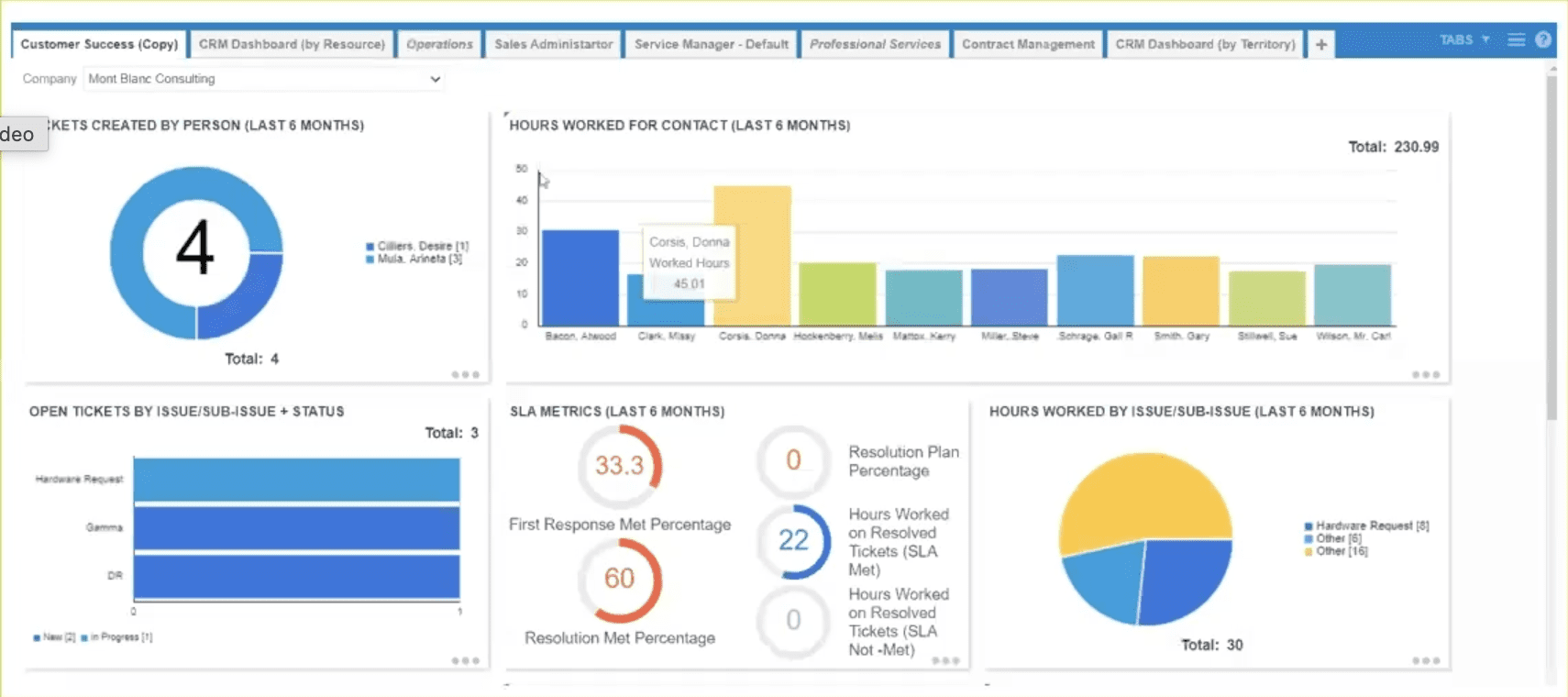
Datto RMM enables admins to manage every endpoint connected to their network, including cloud-hosted devices. The platform creates topology maps that visually display client networks to help identify issues quickly. IT teams can resolve issues using one-click remote access for laptops, desktops, and servers, with live chat support for end users. The platform also offers intelligent alerts, auto-response capabilities, and built-in security features including ransomware detection and automated patch management. Datto also offers a unified Microsoft 365 management module for viewing all M365 tenants and managing user configurations, including onboarding, offboarding, quarantining users, and resetting passwords.
Our Take
Datto RMM is a strong UEM solution for MSPs and SMBs. We were impressed by the 24/7/365 support and digital adoption tool, which makes deployment relatively quick and easy. The platform integrates with leading PSA, networking, and documentation solutions to further streamline operations. We recommend Datto RMM for any MSP or SMB looking for a secure, easy-to-manage endpoint management platform.
Strengths
- One-click remote access for laptops, desktops, and servers
- Built-in ransomware detection and automated patch management
- Unified Microsoft 365 management module
- 24/7/365 support with digital adoption tool
Cautions
- Pricing not publicly available; requires contacting Datto for a quote
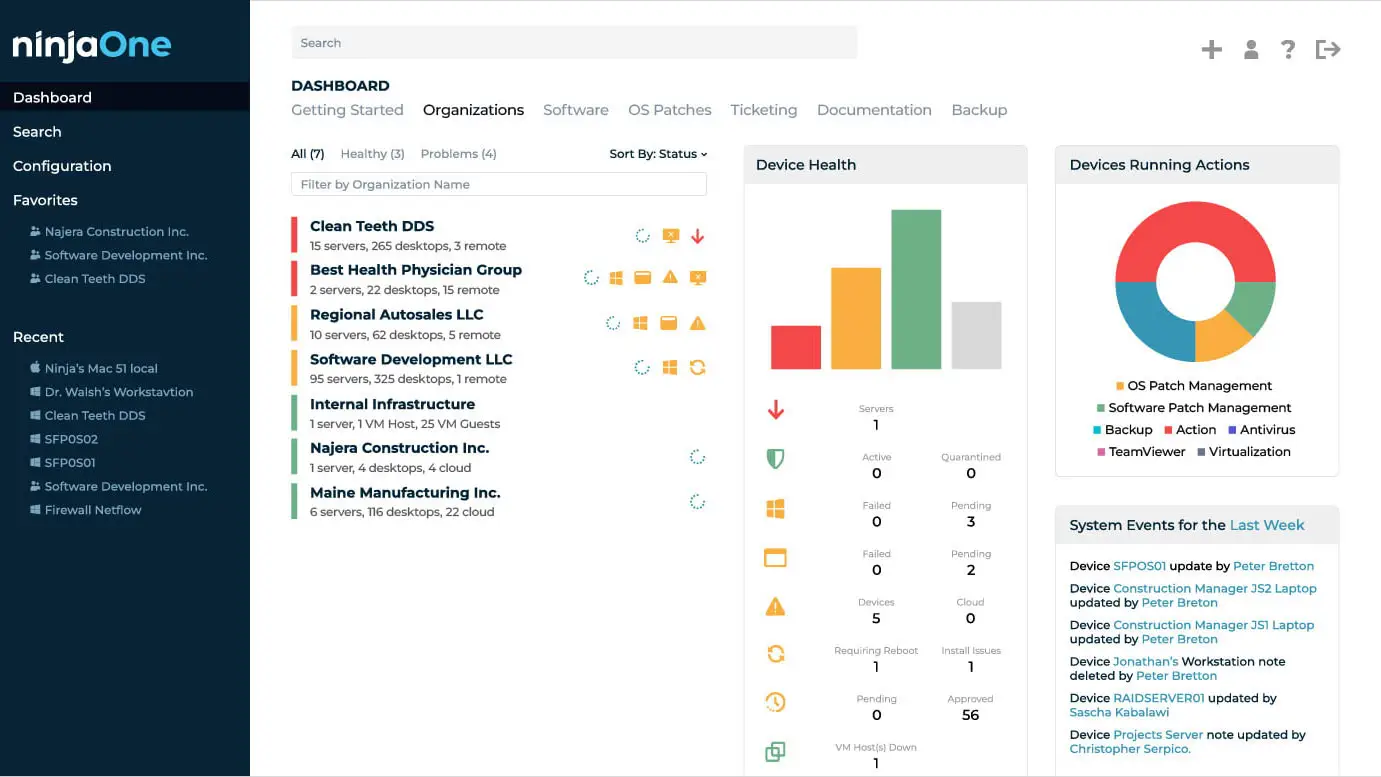
NinjaOne is a unified IT management platform that combines endpoint management, patch management, remote monitoring, and backup into a single cloud-native console. We were impressed by the platform’s depth; it manages Windows desktops, macOS devices, Linux servers, VMs, and network devices without switching tools. The interface is highly intuitive with a modern design, and the platform scales well from SMBs to large enterprises and MSPs.
NinjaOne Endpoint Management Key Features
Cross-platform coverage manages Windows, macOS, Linux, servers, VMs, and network devices from one console. Automated patching covers OS and third-party applications with Patch Intelligence AI for CVE/CVSS-based prioritization and rollback capability. Conditional policies leverage hundreds of out-of-the-box scripts for automated detection and response. The Overview dashboard uses a traffic light color-coded graph to highlight critical actions, with drill-down into hardware details and full software inventories. Software management inventories all installed applications and detects unauthorized installs. Endpoint backup handles file, folder, and image backups, encrypted at rest and in transit.
Our Take
We think NinjaOne is an excellent fit for SMBs, mid-market IT teams, and MSPs that want consolidated endpoint management without the complexity of heavier enterprise suites. The per-device monthly pricing includes free unlimited onboarding support and training, and full deployment typically takes two weeks to a month. The platform is particularly strong for organizations with high compliance requirements or distributed workforces. Something to be aware of is that NinjaOne covers software installation and uninstallation but not software configuration management.
Strengths
- Manages Windows, macOS, Linux, servers, VMs, and network devices from one console
- Conditional policies with hundreds of out-of-the-box scripts for automated remediation
- Patch Intelligence AI with CVE/CVSS scoring prioritizes approvals
- Free unlimited onboarding support and training included
Cautions
- No software configuration management
- Not an advanced security product; doesn't replace EDR or threat detection tools
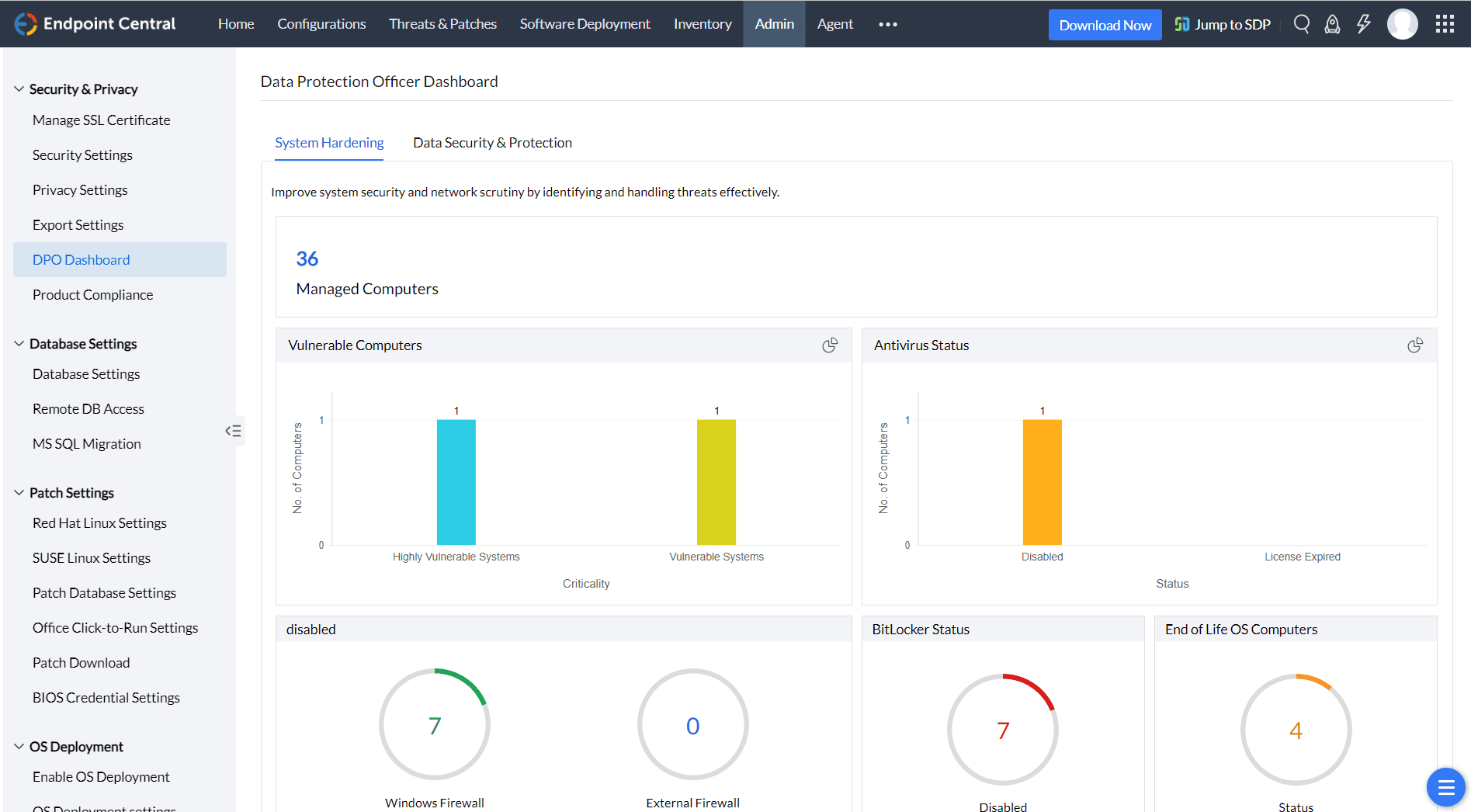
ManageEngine Endpoint Central (formerly Desktop Central) is a unified endpoint management and security platform that brings patch management, software deployment, remote troubleshooting, and asset tracking into a single console. We found the depth of automation and configuration options to be the standout; it provides granular control that most competitors skip. It supports Windows, macOS, Linux, iOS, Android, and Chrome OS.
ManageEngine Endpoint Central Key Features
Automated patch management covers OS and third-party application updates across Windows, macOS, and Linux with scheduled deployment windows and compliance reporting. Software deployment handles silent installation, uninstallation, OS imaging, and updates across endpoints. Anomaly detection tracks unusual behavior across endpoints, giving security teams early warning on suspicious activity. USB device management and endpoint activity reports add control layers that matter in regulated industries. Asset management links hardware and software inventory with actual usage statistics. The platform now integrates endpoint detection and response, zero-trust network access, and digital employee experience management into the same console. A free edition covers up to 25 computers and 25 mobile devices.
What Customers Say
Customers highlight the value for money and the breadth of features in a single platform. Teams in banking, manufacturing, and education praise the platform for centralizing previously fragmented endpoint operations. Support quality gets consistently positive feedback. Something to be aware of is that the interface can feel dense on first use, with essential functions buried under layers of menus. The free edition excludes advanced controls like browser security and configuration management. Initial setup requires significant investment to unlock the full automation potential.
Our Take
We think ManageEngine Endpoint Central is a strong fit for mid-market and enterprise teams in regulated industries that need highly customizable endpoint management with security visibility. The anomaly detection, USB controls, and compliance reporting add real value in healthcare, finance, and manufacturing. If interface simplicity is a priority, expect a learning curve as you navigate the depth of options.
Strengths
- Deep automation covers patching, software deployment, OS imaging, and configuration
- Anomaly detection provides early warning on suspicious endpoint behavior
- Free edition covers up to 25 computers and 25 mobile devices
- Now includes EDR and zero-trust network access in the same platform
Cautions
- Reviews mention the interface feels dense with features buried in menus
- Initial setup requires significant investment to unlock full automation
Atera Endpoint Management
Atera is an all-in-one IT management platform that bundles remote monitoring and management, helpdesk, ticketing, and automation with per-technician pricing. We found the pricing model to be the defining differentiator; it fundamentally changes the economics for MSPs and growing IT teams by removing per-endpoint costs. It covers Windows, macOS, and Linux through a single agent. Atera was named a Visionary in the 2026 Gartner Magic Quadrant for Endpoint Management Tools.
Atera Endpoint Management Key Features
Per-technician pricing allows unlimited endpoint management for a fixed monthly fee, removing cost barriers as you scale. Network discovery is built into the single agent for Windows, macOS, and Linux. Remote access options include Splashtop and ScreenConnect available directly from the platform. Robin (formerly IT Autopilot), launched in March 2026, is an autonomous AI agent that resolves complex technical issues across devices, networks, and cloud environments without human intervention. AI Copilot provides real-time insights, troubleshooting suggestions, and automated ticket handling. Automation workflows handle routine tasks like patching and script deployment. The add-on ecosystem covers security tools including MDR and endpoint protection.
What Customers Say
Customers say the interface is polished and easy to pick up, with new team members productive within their first hour. The pricing model consistently comes up as a deciding factor for MSPs. The smooth flow from monitoring alerts to support tickets gets positive marks. Something to be aware of is that hardware inventory reporting lacks concise summary views for quick assessments. Third-party application management is limited, with some users reporting failed updates for apps not installed through Atera. Splashtop connections can fail intermittently, requiring fallback to ScreenConnect.
Our Take
We think Atera is a smart pick for MSPs and IT teams scaling across multiple clients where per-endpoint pricing erodes margins. The all-in-one approach keeps operational complexity low, and the Robin AI agent adds meaningful automation capability. If you need advanced reporting, deep feature customization, or full mobile device management, the platform may feel lighter than established competitors.
Strengths
- Per-technician pricing with unlimited endpoints removes cost barriers to scaling
- Robin AI agent autonomously resolves technical issues without human intervention
- Multiple remote access options including Splashtop and ScreenConnect
- Named a Visionary in the 2026 Gartner Magic Quadrant for Endpoint Management
Cautions
- Users report hardware inventory reporting lacks concise summary views
- Reviews mention Splashtop connections fail intermittently
Citrix Endpoint Management
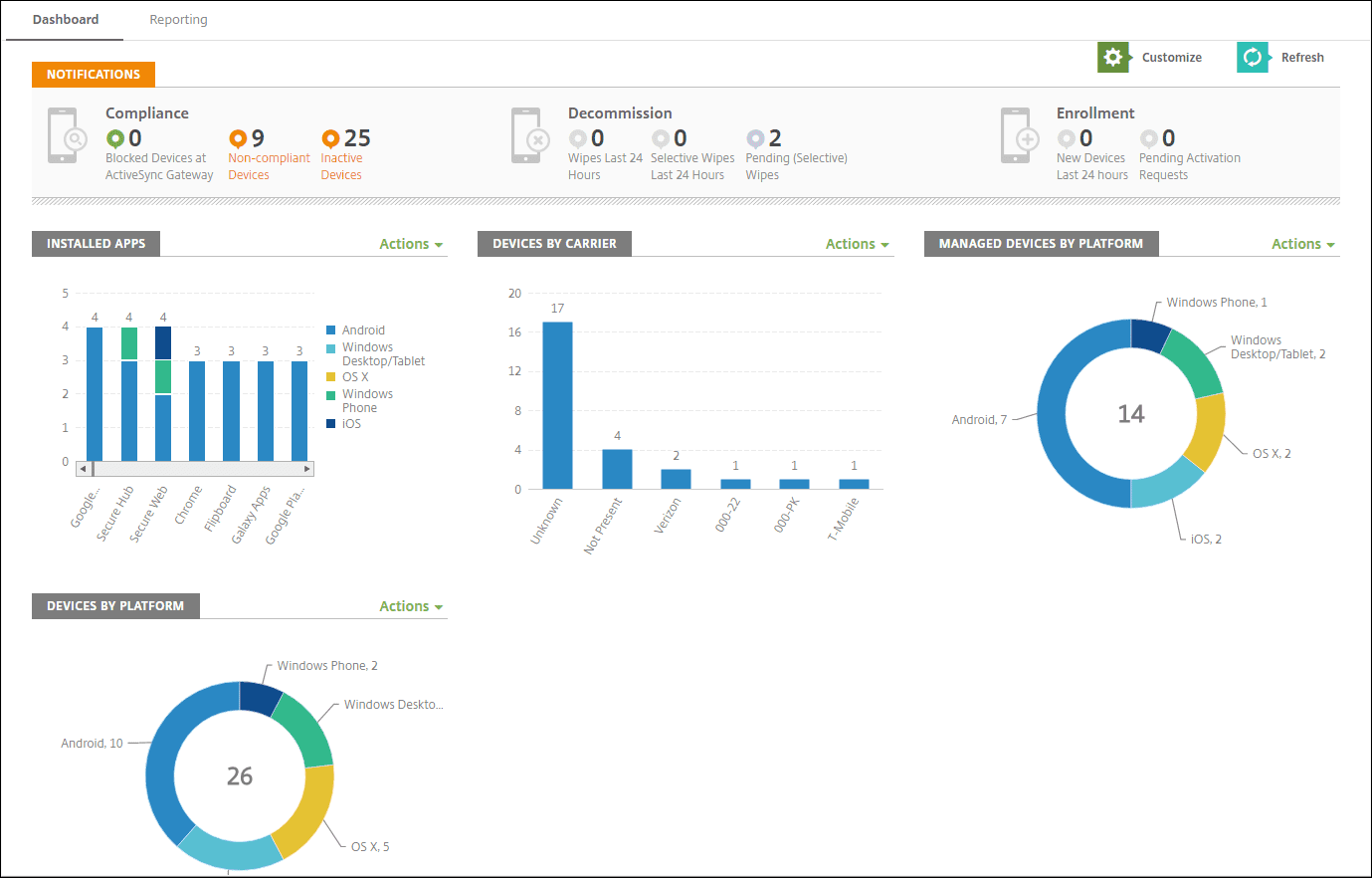
Citrix Endpoint Management is a cloud-delivered UEM platform designed to secure and manage endpoints for enterprise organizations with distributed workforces. Citrix specializes in enabling remote productivity, and their endpoint management offering reflects that focus, combining device management with secure access to virtual desktops, apps, and files from one context-aware interface. We found the security layering, combining multi-factor authentication, encryption, and a micro-VPN, to be the core strength.
Citrix Endpoint Management Key Features
Multi-factor authentication, encryption, and a micro-VPN work together to protect corporate data in transit and at rest, regardless of the security state of the employee’s device. Context-aware access controls adjust permissions based on user role and device posture. Over 300 security policies are available for advanced compliance management. Over-the-air provisioning and self-service enrollment via a one-time passcode speed up device onboarding without heavy IT involvement. The enterprise app store simplifies application deployment, with push and remote removal capabilities. Role-based access views give admins control over what each user sees. Cloud and on-premises deployment options provide flexibility for organizations with data residency requirements, and active clustering ensures high scalability.
What Customers Say
Customers say the platform is straightforward once configured, with a clean interface that requires minimal training for day-to-day use. Financial services teams highlight secure remote access and low system footprint as deciding factors. Integration with Citrix Workspace gets positive marks for unified access to virtual apps, desktops, and files. Something to be aware of is that initial implementation can be complex, particularly for organizations new to Citrix technologies. Disconnected sessions can persist and cause access conflicts on subsequent logins. Application wrapping is reported as tricky to configure.
Our Take
We think Citrix Endpoint Management is a solid choice for enterprises that need secure remote access with strong identity controls for a distributed workforce. The micro-VPN and context-aware access are well suited for regulated industries like financial services and healthcare. The platform is easy to deploy and scales well, which is good to see. If you need fast deployment or minimal third-party dependencies, weigh those factors before committing.
Strengths
- Multi-factor authentication with micro-VPN protects data in transit and at rest
- Context-aware access adjusts permissions based on role and device posture
- Over 300 security policies for advanced compliance management
- Cloud and on-premises deployment options for data residency flexibility
Cautions
- Customers note implementation complexity, especially for teams new to Citrix
- Users report disconnected sessions persist and cause login conflicts
Hexnode UEM
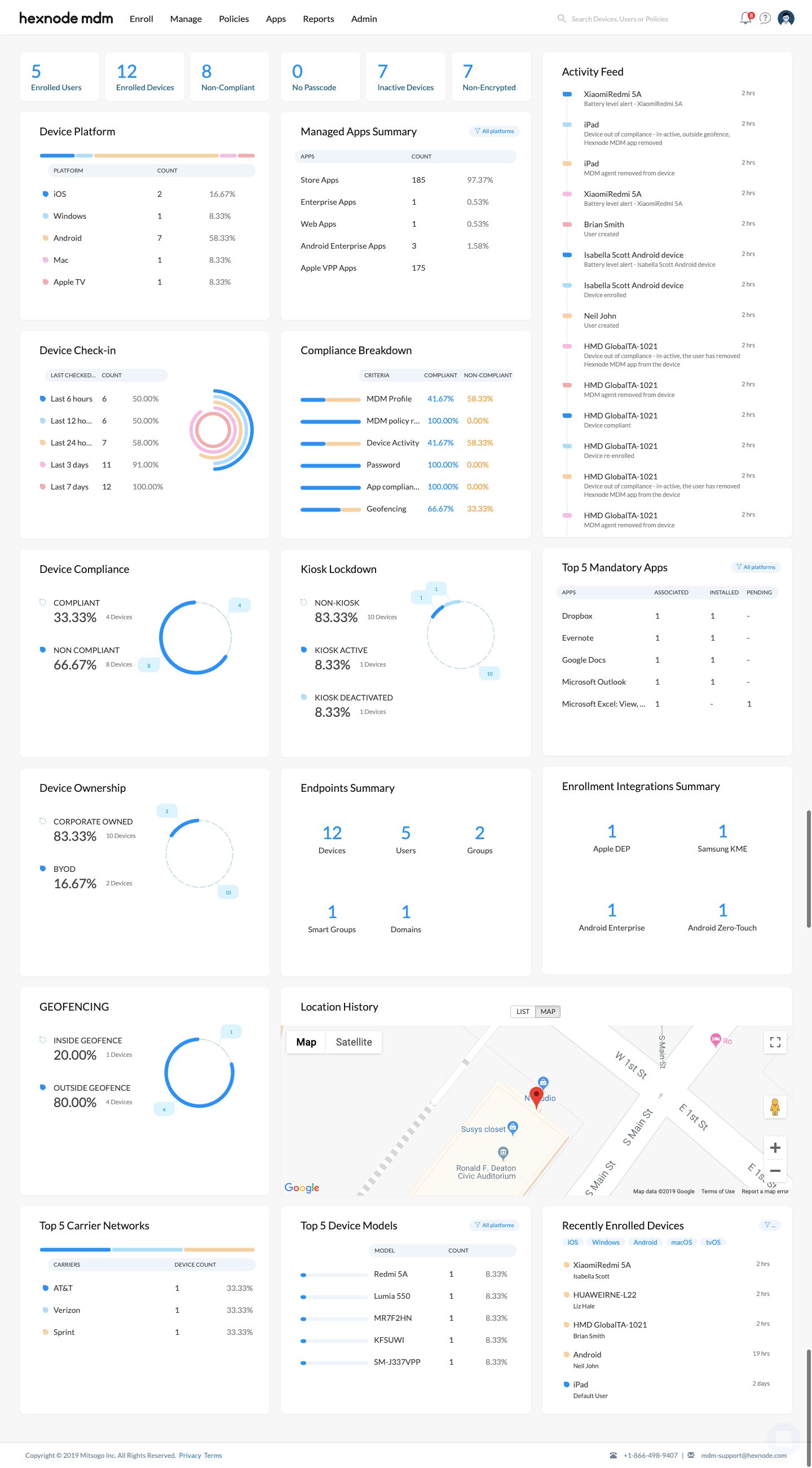
Hexnode UEM is a unified endpoint management platform from Mitsogo Inc. with strong security controls across Windows, macOS, Android, iOS, tvOS, and Fire OS. Hexnode supports organizations in over 100 countries and targets IT teams managing mixed device fleets, BYOD programs, and kiosk deployments. We found the policy enforcement depth and kiosk lockdown capabilities to be standout features, particularly for Android deployments.
Hexnode UEM Key Features
Policy enforcement includes BitLocker management, password policies, data encryption, and conditional access across device types. Admins can secure, encrypt, lock, and wipe corporate data remotely from any location. Built-in email security ensures corporate attachments are only opened on approved devices. Hexnode’s Smart Kiosk mode turns mobile devices into purpose-built kiosks for specific work applications and secure browsing; in kiosk mode, admins can remotely configure peripheral settings like volume and screen brightness, and view the device screen in real time. Geofencing and network security policies extend control beyond the device itself. The Gateway migration tool lets organizations move fleets from other platforms with silent or guided enrollment. Zero-touch onboarding works through Autopilot, Apple Business Manager, and Android Enterprise. A secure container isolates work data from personal apps, supporting BYOD environments. Hexnode integrates with Active Directory, Google Workspace, and Microsoft 365 for streamlined deployment.
What Customers Say
Customers praise the intuitive interface and simple enrollment process. Teams running large Android kiosk deployments highlight the lockdown strength. Policy assignment and configuration get positive marks for speed and flexibility. Something to be aware of is that key device control features like remote lock and security actions require the highest subscription tier. macOS management capabilities feel basic compared to the depth of Android features. Device unenrollment can leave partial enrollments behind.
Our Take
We think Hexnode UEM is a strong pick for organizations running mixed device environments with a focus on Android kiosk or BYOD deployments. The security controls and migration tooling are solid, and the wide range of features makes it a strong option for managing mobile enterprise device fleets, from simple data segregation right through to high-security screen monitoring. If you need deep macOS management or full remote control on lower-tier plans, evaluate your subscription level carefully before committing.
Strengths
- BitLocker, encryption, and conditional access provide layered cross-platform security
- Android kiosk lockdown is nearly impossible to bypass
- Gateway migration tool moves fleets from other platforms with silent enrollment
- Covers Windows, macOS, Android, iOS, tvOS, and Fire OS
Cautions
- Key device control features require the highest subscription tier
- Customers note macOS management feels basic compared to Android
Microsoft Intune
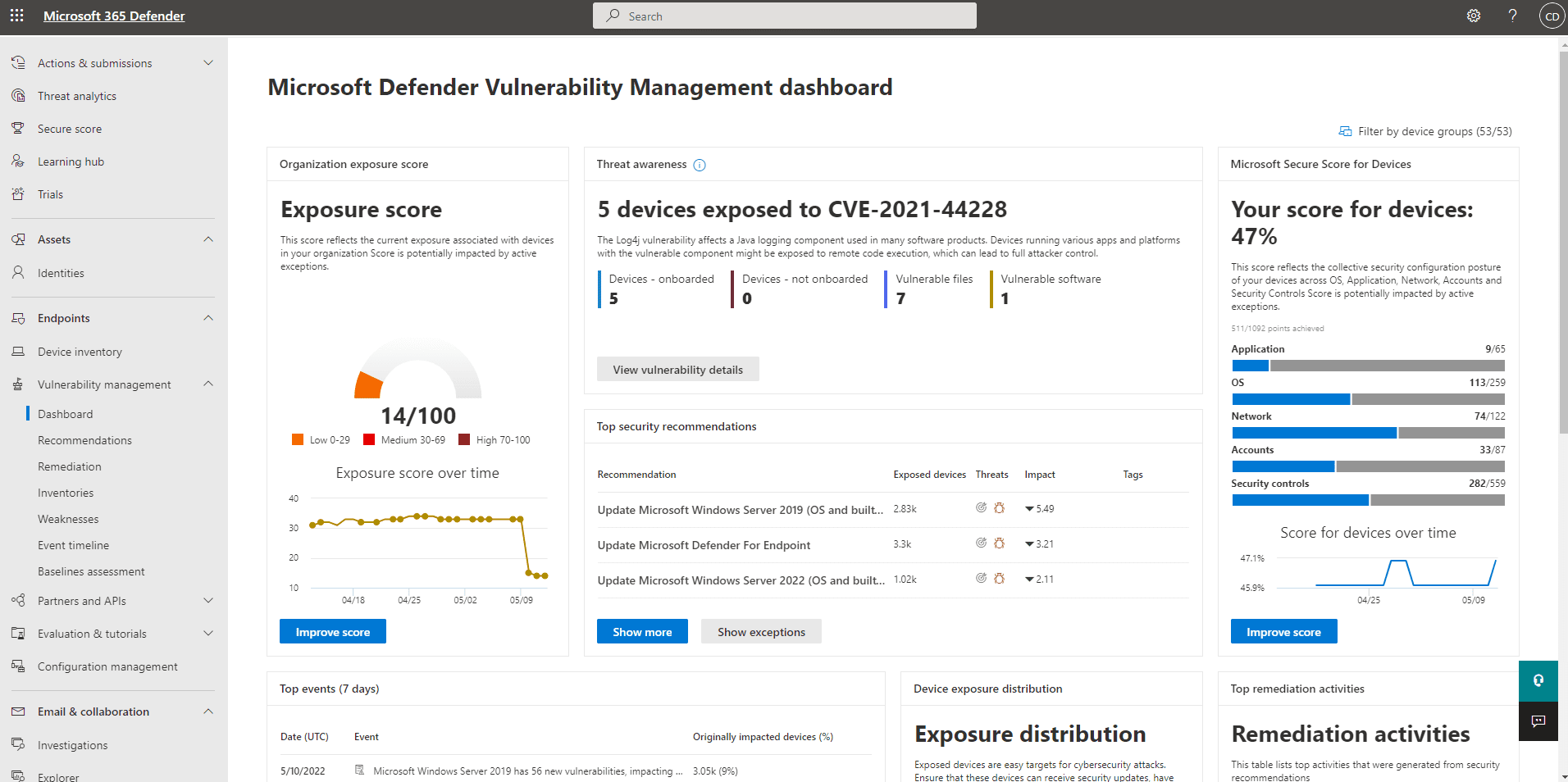
Microsoft Intune (formerly Microsoft Endpoint Manager) is a cloud-native endpoint management platform that handles device management, application management, and endpoint security across Windows, macOS, iOS, Android, and Linux. Microsoft combined their Intune and Configuration Manager offerings into a unified platform, and it remains the most widely used UEM tool on the market. We found the depth of integration with the Microsoft ecosystem to be the defining advantage; if your organization runs on Microsoft 365 and Entra ID, Intune fits into existing workflows with minimal friction.
Microsoft Intune Key Features
Cloud-native device management supports enrollment, configuration, and compliance policies for Windows, macOS, iOS, Android, and Linux endpoints. Continuous compliance verification and conditional access work together, checking device health before granting resource access. Intent-based policies and application-level controls ensure employees only access the resources they need, with automated remediation of workplace application vulnerabilities. AI-driven automation handles threat prioritization and routine workflows, reducing manual triage. Windows Autopilot automates device provisioning and setup for zero-touch deployment. The Intune Suite consolidates privilege management, endpoint analytics with AI-driven insights, and remote help into a single add-on. Built-in patching closes vulnerabilities across platforms without extra tools. Endpoint analytics provides visibility into device health, app performance, and user experience scores, helping organizations proactively track satisfaction against company and industry baselines.
What Customers Say
Customers praise the integration with Microsoft 365 and Entra ID as the primary reason for adoption. Windows device management is consistently rated as a strength, with Autopilot simplifying large-scale deployments. Education teams appreciate bundled licensing within existing agreements. Something to be aware of is that initial setup is difficult for teams new to the Microsoft ecosystem. The console interface changes frequently, which can disrupt established admin workflows. Licensing across Plan 1, Plan 2, and the Intune Suite adds complexity.
Our Take
We think Microsoft Intune is the natural choice for organizations heavily invested in the Microsoft ecosystem. The Zero Trust foundation and integration with Entra ID create a unified management and security experience that standalone UEM tools struggle to match. The platform is highly scalable and available both on-premises and via the Microsoft cloud, which is good to see. If you manage a mixed-OS environment with a significant macOS or Linux fleet, evaluate whether the non-Windows experience meets your needs before committing. It’s also worth noting that Intune doesn’t integrate easily with third-party identity and asset management solutions.
Strengths
- Native integration with Microsoft 365 and Entra ID eliminates tool sprawl
- Continuous compliance verification enforces Zero Trust at the device level
- AI-driven automation prioritizes threats and handles routine IT workflows
- Windows Autopilot enables zero-touch device provisioning at scale
Cautions
- Customers note macOS and Linux management feels less polished than Windows
- Licensing across Plan 1, Plan 2, and the Intune Suite adds complexity
Rippling
Rippling combines unified endpoint management, identity and access management, and HR operations in a single platform built on a unified employee data model. We found the attribute-based automation to be the defining capability; device configuration, app provisioning, and security policies all trigger automatically based on role, department, location, and training status. It supports iOS, iPadOS, macOS, and Windows endpoints.
Rippling Key Features
The employee graph drives automated device provisioning and policy enforcement based on role, department, location, and training status. New hires receive the right apps and permissions from day one; departures trigger remote lock and wipe instantly. Zero-touch deployment works through Apple Business Manager and Entra ID integration. macOS password federation gives users one password for device login, SSO apps, and directory access. Pre-built compliance templates for NIST, SOC 2, and CIS accelerate policy rollout. Platform coverage spans iOS, iPadOS, macOS, and Windows. The unified IT and HR platform eliminates manual handoffs between teams for onboarding and offboarding.
What Customers Say
Customers praise the self-service portal and the automation of onboarding workflows. Reducing manual provisioning steps is consistently highlighted as a time saver. The unified view of employee data across IT and HR gets strong marks. Something to be aware of is that device inventory customization is limited for building detailed tracking views. The mobile app has persistent authentication timeouts that push users to the desktop version. There is no native Linux device support.
Our Take
We think Rippling is a strong fit for organizations that want endpoint management connected directly to HR and identity data. The attribute-based automation removes manual handoffs between IT and HR, which is a real advantage for companies with complex onboarding flows. If you need deep device inventory reporting, Linux support, or rely heavily on mobile management workflows, check those areas first.
Strengths
- Attribute-based automation provisions devices and policies from employee data
- Zero-touch deployment through Apple Business Manager and Entra ID
- macOS password federation unifies device, SSO, and directory credentials
- Pre-built NIST, SOC 2, and CIS compliance templates
Cautions
- No native Linux device support
- Users report mobile app authentication expires frequently
Omnissa Workspace ONE
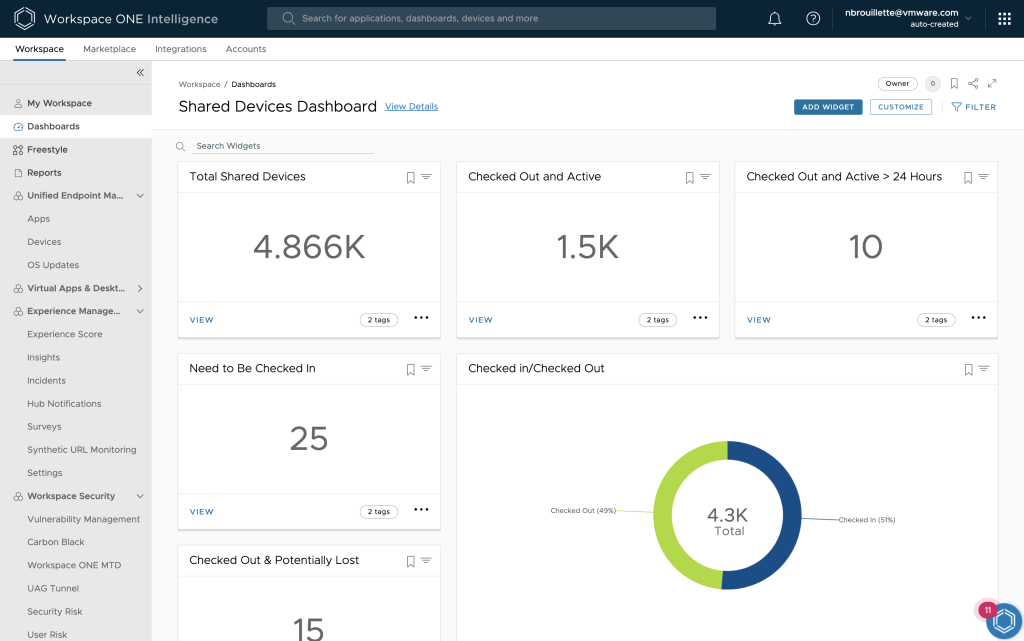
Omnissa Workspace ONE (formerly VMware Workspace ONE) is a unified endpoint management platform supporting all major operating systems with flexible on-premises, SaaS, or hybrid deployment options. Omnissa was acquired by KKR from Broadcom and launched as an independent company in mid-2024. The platform provides end users with a digital workspace that admins can use to manage endpoints, ensure end-to-end security, and integrate multiple enterprise systems across corporate-owned and BYOD devices. We found the zero-trust authentication and deployment flexibility to be the core differentiators, particularly for enterprises managing complex migration scenarios.
Omnissa Workspace ONE Key Features
Zero-trust authentication dynamically assesses user and device risk before granting access, going beyond static policies. If an attempted login has a high risk score, admins are notified and automatic remediations are triggered. The single console manages corporate and BYOD devices across Windows, macOS, Linux, iOS, and Android. Over-the-air app deployment works without physical access to endpoints. The platform includes tailored productivity apps for email, notes, tasks, content, and a corporate intranet. Workspace ONE Intelligence provides integrated insights into the digital workspace environment based on device, app, and user data. Advanced eSIM management for Android allows administrators to remotely provision, activate, monitor, and remove eSIM profiles. The 2602 release adds a modernized console with redesigned device list views, macOS onboarding workflows, and enhanced Android policies. Flexible deployment architecture supports on-premises, SaaS, or hybrid configurations at a component level.
What Customers Say
Customers praise the breadth of OS support and the ability to manage all major platforms from one console. Remote app installation and profile management simplify daily administration. Integration with tools like ServiceNow gets positive marks. Something to be aware of is that some customers report concerns about product development pace and support quality following the Broadcom-to-Omnissa transition. The interface has a steep learning curve for new administrators. Software deployment queues can stall without clear error visibility.
Our Take
We think Omnissa Workspace ONE is worth evaluating for enterprises that need flexible deployment with zero-trust controls across a mixed device environment. The architecture is highly flexible, supporting organizations on-premises, via SaaS, or as a hybrid combination, and it integrates with various third-party identity, endpoint security, and IT service management tools. The recent 2602 release shows active product development under the Omnissa brand. If support responsiveness and product roadmap clarity are important to your decision, investigate the post-transition state carefully.
Strengths
- Zero-trust authentication dynamically assesses user and device risk
- Flexible on-premises, SaaS, or hybrid deployment options
- Supports Windows, macOS, Linux, iOS, and Android from one console
- Active development with modernized console and eSIM management in 2602 release
Cautions
- Reviews mention concerns about support quality post-Broadcom transition
- Customers note the interface has a steep learning curve for new admins
Other IT Management Services
Provides endpoint management solutions for diverse use cases, including frontline and dedicated devices.
A cloud-based Apple device management platform for MSPs and IT teams.
A comprehensive Apple endpoint management solution for IT professionals.
How We Compared The Best Unified Endpoint Management (UEM) Solutions
We assessed each UEM platform across device coverage, automation capabilities, security controls, deployment flexibility, and real-world usability. Device coverage included support for Windows, macOS, Linux, iOS, Android, and non-traditional endpoints like IoT devices and kiosks. We evaluated how each platform handles patch management, software deployment, remote troubleshooting, and policy enforcement.
For automation, we looked at how effectively each platform reduces manual intervention through features like zero-touch provisioning, AI-driven workflows, and automated compliance enforcement. We assessed whether these automations translate into operational time savings or add configuration overhead.
We reviewed verified customer reviews to understand real-world deployment experiences, focusing on onboarding complexity, support quality, and where each platform falls short in day-to-day use. Customer feedback informed our assessment of interface usability, feature depth, and scaling behavior.
Vendor briefings and product documentation were used to validate feature claims, verify current platform capabilities, and understand recent product changes including rebrandings and acquisitions. We cross-referenced customer feedback with vendor documentation to identify gaps between marketed capabilities and actual user experience.
Expert Insights’ editorial and commercial teams operate independently. No vendor can pay to influence the testing, review, or ranking of their products. Our recommendations are based on hands-on evaluation, verified customer feedback, and independent research.
What To Look For In Unified Endpoint Management (UEM) Solutions
Choosing the right UEM platform depends on your organization’s device mix, deployment model, and operational priorities. Here are the key factors to evaluate.
**Cross-Platform Device Coverage.** The most important factor is whether the platform supports every device type in your environment. This means Windows, macOS, Linux, iOS, and Android at minimum, but also Chrome OS, IoT devices, and kiosks if your fleet includes them. Hexnode UEM stands out for its coverage of tvOS and Fire OS alongside the standard platforms, while NinjaOne covers servers, VMs, and network devices from the same console.
**Automation Depth.** Look at what the platform actually automates versus what it requires manual setup for. Patch management, software deployment, compliance enforcement, and onboarding workflows should all reduce manual intervention once configured. Rippling’s attribute-based automation, which ties device provisioning directly to HR data, is a strong example of automation that removes entire manual handoff steps.
**Security Controls.** UEM platforms vary significantly in built-in security capabilities. Some include zero-trust authentication, conditional access, and encryption management natively, while others rely on third-party integrations. Microsoft Intune’s continuous compliance verification and Omnissa Workspace ONE’s dynamic risk-based authentication are both strong approaches to zero-trust endpoint security.
**Deployment Flexibility.** Consider whether you need cloud-only, on-premises, or hybrid deployment. Organizations with data residency requirements or complex migration scenarios will benefit from platforms like Omnissa Workspace ONE and Citrix Endpoint Management, which offer all three deployment models. Fully cloud-native platforms like Atera and NinjaOne trade that flexibility for faster time to value.
**Pricing Model.** UEM pricing structures vary widely and can significantly affect total cost at scale. Atera’s per-technician model with unlimited endpoints changes the cost equation for MSPs, while Microsoft Intune’s tiered Plan 1, Plan 2, and Suite licensing can add complexity. Understand what is included in each tier and what requires add-on purchases before committing.
**Integration Ecosystem.** Evaluate how well the platform connects with your existing tools. Microsoft Intune is the natural fit for Microsoft 365 environments, while ManageEngine Endpoint Central integrates EDR and zero-trust network access natively. If you rely on third-party identity providers or ITSM tools, verify compatibility before committing.
The Bottom Line
Start with your device mix and operational model. MSP-focused platforms like Datto RMM, NinjaOne, and Atera are built for multi-client management, while enterprise UEM tools like Microsoft Intune, Omnissa Workspace ONE, and Citrix Endpoint Management are designed for single-organization fleets with deeper security and compliance requirements. Test shortlisted platforms with your actual device types and workflows before making a final decision.
 FAQs
FAQs
Unified Endpoint Management (UEM): Everything You Need To Know
Unified endpoint management (UEM) tools enable IT teams to monitor and manage all the endpoints connected to their network, and all the applications installed on those endpoints. They can also be used by MSPs to manage their clients’ devices.
To really understand what UEM is, we first need to take a look at its predecessors in the endpoint management space: mobile device management (MDM), enterprise mobility management (EMM), and client management tools (CMT).
MDM solutions allow IT workers to configure usage and security policies for the mobile devices connected to their network. This makes them particularly popular among organizations with a remote workforce. However, MDM solutions don’t support the management of on-prem devices, meaning that IT teams with hybrid or office-based employees must juggle two separate management tools for on-site and off-site endpoints. Additionally, traditional MDM solutions don’t support a BYOD culture as employees can’t switch easily between using personal and work applications on their device.
EMM is an evolution of MDM that focuses on managing the applications installed on each endpoint. It solves the BYOD problem by using containers to segment work and personal apps stored on a mobile device. This means that admins can manage and secure workplace apps, without encroaching on the user’s privacy by meddling with their personal apps, too.
CMTs enable IT teams to automate administrative tasks such as deploying operating systems, distributing software, and administering patches across a network of client devices.
UEM tools combine the features from each of these other tools. They provide comprehensive visibility into all your endpoints—not just the mobile devices. This enables admins to carry out administrative tasks on those endpoints, monitor their health and usage, and secure application usage across BYOD devices.
Because UEM tools combine features from MDM, EMM, and CMT tools, there are a variety of solutions on the market that all offer different specialized feature sets. However, there are some features that all united endpoint management solutions should offer:
- Device management: The device management console should be centralized, enabling you to monitor, manage, and troubleshoot endpoints for managed devices from anywhere, at any time. From this console, should be able to view all the managed devices on your network, distribute software, configure role-based conditional access, administer patches and updates, and generate reports on compliance, device health, and system alerts. You should be able to do this for remote devices also, including mobile content management.
- Application controls: You should be able to distribute applications either via automatic rollouts or via an app-store experience, as well as create allow/deny lists of applications to prevent users from accidentally installing malicious software. You should also be able to containerize the applications running on personal devices, enabling you to manage workplace apps while maintaining users’ privacy within their personal apps.
- Device compatibility: Your chosen solution should support all the different types of endpoints and operating system connected to your network. Usually, that will include Windows, Mac, and Linux desktop and laptops, Chrome, iOS and Android smartphones or tablets, and IoT devices such as printers.
- Integrations: For easier deployment and patch management, your chosen solution should integrate with any other endpoint management tools you have, as well as your user directory and workplace productivity suite (e.g., Microsoft 365 or Google Workspace). It should also offer integrations with the third-party security tools that you’re using to protect your endpoints, such as antivirus, VPN/ZTNA, and IAM tools.
- In-built features for security: Some UEM tools come with security features built in. This might include role-based multi-factor authentication to ensure only verified users are accessing the network; a VPN or ZTNA that ensures remote connections are secure; and email security or malware scanning that ensures only trusted, safe documents can be opened on the device. The solution may also offer remote device wipe/lock, automatic device lockdown after a period of inactivity, and remote peripheral setting adjustment.
Remote monitoring and management (RMM) software enables managed service providers (MSPs) to monitor, manage, and troubleshoot their clients’ networks without having to visit those clients in person. This allows MSPs to troubleshoot and remediate issues across their clients’ network much more quickly and efficiently, which in turn leads to reduced downtime, increased security and productivity, and higher client satisfaction.
RMM tools often offer powerful automation that make it easier for MSPs to deal with repetitive administrative tasks, such as running self-healing scripts and administering patches. This makes them popular among MSPs that have a large client base, or whose clients are using numerous different applications and operating systems—all of which need to be continuously monitored for updates—as it allows them to make these updates easily and focus on more complex issues.
RMM and UEM solutions do offer some overlapping features, such as endpoint health monitoring and the ability to administer patches or updates, but they are designed for two different purposes. RMM solutions can be used to monitor client networks, remediate security issues, and provide help desk services to clients. UEM solutions can be used to apply consistent policies across endpoints, deploy software, and monitor device health.
Around 58% of organizations around the world currently have workforces who “telework”, or work from home – a number that has hugely increased over the course of the past year. The COVID-19 pandemic acted as a major catalyst for remote working, as governments around the world instructed people to stay at home to combat the spread of the virus. This meant that many organizations suddenly had to provision their employees to work from home, at very short notice.
Unfortunately, the speed of this change often meant sacrificing security in the name of productivity. This was largely because many organizations were unable to provision corporate devices to each employee, instead implementing a “bring-your-own-device (BYOD) culture. Although this enables employee flexibility, BYOD can introduce a whole range of security issues; not least that it’s more difficult to keep track of which devices are actually connected to your network!
Personal cell phones, laptops and tablets are much less secure than corporate-issued devices; they generally aren’t secured with MFA or a password manager, for example, and are less likely to encrypt stored data, connect to the network via a VPN, or have antivirus software installed on them. This means that they make much easier targets for bad actors trying to access your corporate data. Think of it this way: each of your organization’s endpoints is a doorway that opens into your corporate data kingdom. If an endpoint is properly managed and secured, that door is locked and bolted; if not, it’s swinging on one hinge. Because of this, personal devices are twice as likely to become infected with malware than their corporate counterparts.
UEM solutions provide a centralized view of all of the endpoints connected to your network, as well as enabling you to centrally and remotely manage all of those endpoints without having to compile data from on-site and off-site device management tools; the UEM solution covers them all.
UEM also makes it easier for you to monitor device use and health, including vulnerabilities that need patching, OS updates and software or application updates that need to be deployed. Combined, these features enable you to provide a baseline level of security and threat monitoring across your endpoints, even for personal mobile devices.
Some UEM solutions even include a variety of in-built security functions that enable you to protect your endpoints against malware, viruses and malicious applications.


 Written By

Caitlin Harris is the Deputy Head of Content at Expert Insights. As an experienced content writer and editor, Caitlin helps cybersecurity leaders to cut through the noise in the cybersecurity space with expert analysis and insightful recommendations.
Prior to Expert Insights, Caitlin worked at QA Ltd, where she produced award-winning technical training materials, and she has also produced journalistic content over the course of her career.
Caitlin has 8 years of experience in the cybersecurity and technology space, helping technical teams, CISOs, and security professionals find clarity on complex, mission critical topics like security awareness training, backup and recovery, and endpoint protection.
Caitlin also hosts the Expert Insights Podcast and co-writes the weekly newsletter, Decrypted.
 Technical Review
Craig MacAlpine is CEO and Founder of Expert Insights. Before founding Expert Insights in August 2018, Craig spent 10 years as CEO of EPA Cloud, an email security provider that rebranded as VIPRE Email Security following its acquisition by Ziff Davis, formerly J2Global (NASDAQ: ZD) in 2013.
Craig is a passionate security innovator with over 20 years of experience helping organizations to stay secure with cutting-edge information security and cybersecurity solutions.
Using his extensive experience in the email security industry, he founded Expert Insights with the singular goal of helping IT professionals and CISOs to cut through the noise and find the right cybersecurity solutions they need to protect their organizations.