The MSP is now part of the security perimeter, and attackers know it.
Meanwhile, AI is spreading through organizations faster than anyone is governing it, including service providers who have historically managed IT security for their customers.
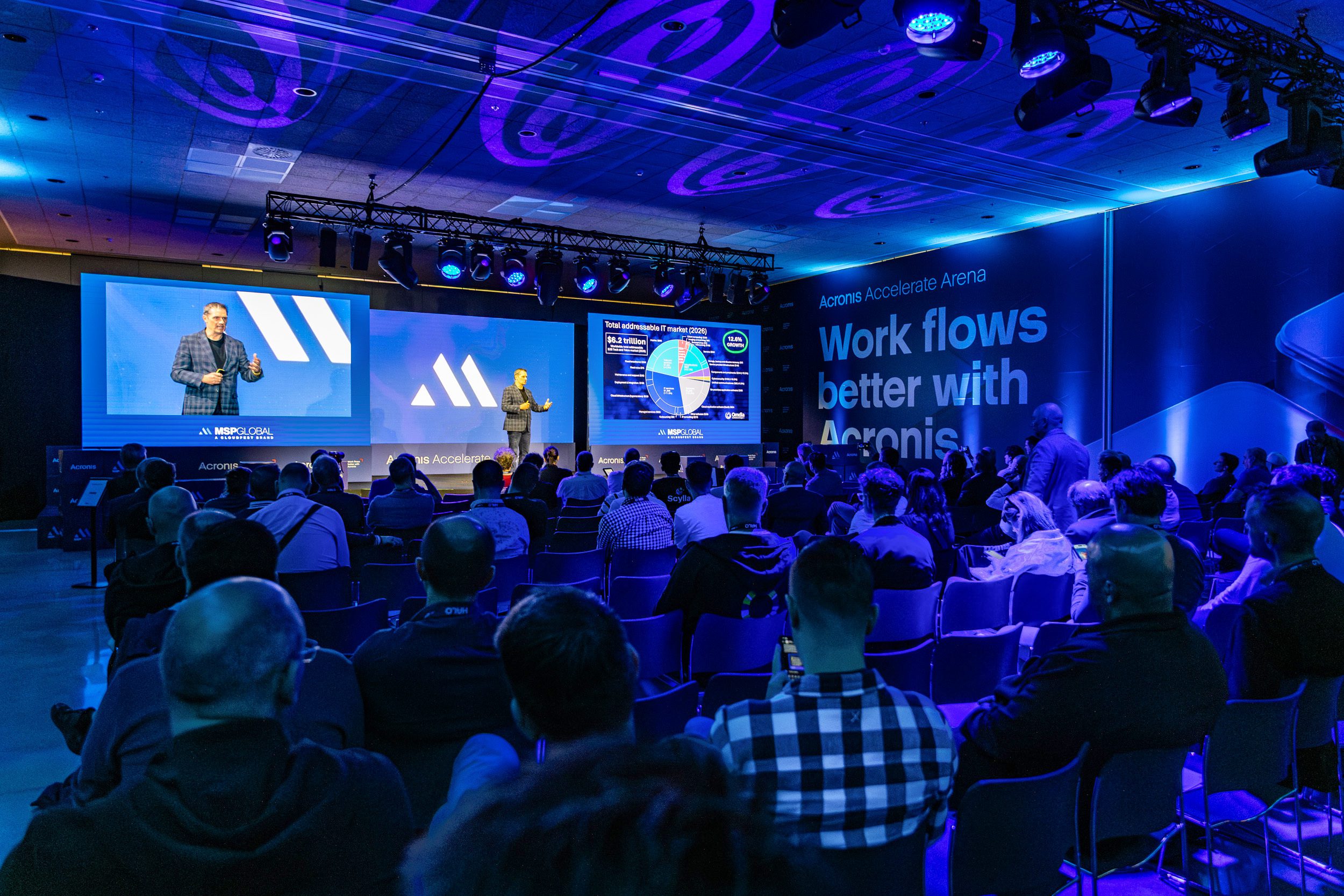
This week, MSP Global 2026 brought the managed services community to Tarragona, Spain. We were on the ground speaking to MSPs about how these challenges are affecting their business.
Here are five takeaways you should know.
MSPs Are Now Part of the Attack Surface
The opening cybersecurity panel argued the MSP is now the security perimeter and at the front lines of defending businesses against cybercrime.
State-backed groups use MSPs as a hub into client networks. Russian and Chinese state sponsors dominate attacks on corporate and defense targets, and unvetted sub-vendors are the top systemic supply chain risk.
That raises a hard question: who is responsible when attackers get in through an MSP?
Agreeing accountability and access in writing before an incident makes that question much easier to answer.
AI Is Spreading Faster Than It Is Governed
Microsoft research found 78% of AI users bring their own AI tools to work.
Jamie Claret, CEO of Autonomate, warned MSPs that their clients’ AI problem is becoming their problem. His questions apply to any security team:
- Who has access to what?
- Which tools are actually approved?
- Who owns the policy and governance?
- What about all those API keys?
- Who is responsible if someone connects a company’s AI assistant to its main database?
AI is making SOCs more efficient, but only with governance in place. Clear data ownership, workflows, guardrails, and AI that reports back on what it has done are critical.
Claret’s advice: “diagnose before you prescribe.” Handing out Copilot licenses doesn’t mean people are using them well.
MSPs May Not Be Ready to Lead on AI
Commercializing AI is one of the biggest opportunities for MSPs, but one they are not yet taking advantage of.
71% of MSPs use AI internally, but only 42% sell AI services to clients, according to MSP Global’s State of the Industry Report.
This may be down to a lack of expertise, but clients aren’t waiting for MSPs to catch up. Many are already turning to separate AI specialists instead of their MSP.
Detection Alone Comes Too Late
Most managed detection services are built for after an incident. Experts on this week’s “Good Cyber Stack” panel, including Andreas Lüning, CTO at G DATA CyberDefense, and Sherrie Savage, Senior Director of EMEA at Liongard, argued for prevention, simpler tooling, training and better visibility.
Others were blunter: detection is too late. Phishing and social engineering are behind 60% of initial intrusions, according to data presented at the event, and attackers quickly weaponize flaws in VPNs and firewalls.
ESET Global Cybersecurity Advisor Jake Moore demonstrated how AI is reshaping the challenges MSPs must address. Using AI to alter his face and voice in real time, he applied for jobs presenting as both a man and a woman.
Out of 261 candidates, he was offered the job. Nobody spotted the deepfake. Verification now has to cover hiring, approvals and anywhere a face or voice is taken as proof.
Preparation Is Still Patchy
Only 53% of MSPs have a formal incident response plan, according to the report, and security investment is driven more by client demand than by incidents.
Jen Ellis, founder of NextJenSecurity, urged organizations to prepare as a whole business: map exposures, define roles and rehearse with every function. Attackers will look for pressure points, including your customers.
Her advice on communications: “Don’t let there be a vacuum, own the narrative.”
The event’s theme was “Serve your ecosystem.” For IT leaders and MSPs alike, the ecosystem is now where the risk sits. Know who has access, verify by default, and agree responsibilities with partners before something goes wrong.